




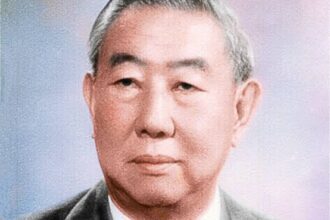
(Kuala Lumpur) — Long before Kuala Lumpur Kepong Berhad (KLK) became one of Malaysia’s leading plantation groups, Lee Loy Seng had learned an important lesson about business: fortunes are often built by recognising the value of an asset before the market fully appreciates it. Born in Menglembu, near Ipoh, Perak, on 22 August 1921, Lee grew up in a family connected to tin mining, one of Malaya’s major sources of commercial wealth. His father, Lee Meng Hin, was a tin miner, exposing the family to the practical realities of natural-resource businesses. Lee would eventually build his reputation around two other commodities, rubber and palm oil.
His entrepreneurial path was not the conventional story of a founder creating a company from scratch. He entered a business environment where land, minerals, agricultural commodities and trading were central to the local economy. Such industries required an understanding of capital, operating costs, asset values and the cycles that could turn a profitable business into a struggling one. These lessons would become relevant when Lee began acquiring an interest in a plantation company whose history stretched back to the early twentieth century.
The origins of KLK predated Lee’s leadership by several decades. The Kuala Lumpur Rubber Company was established in London in 1906 to oversee rubber estates in Malaya. It acquired five estates around Kuala Lumpur, covering approximately 640 hectares, and its shares were listed in London in 1907. The company was part of a wider colonial-era plantation economy in which British capital financed the cultivation of rubber for industrial markets. By the time Lee became involved, the company had already accumulated operating assets and a corporate history that could provide the foundation for further expansion.
The business survived difficult periods in the commodity cycle and major disruptions to Malaya’s economy. The Great Depression damaged demand and prices, while the Japanese occupation during the Second World War disrupted plantation operations. The post-war recovery required investment to restore estates and production. Political uncertainty and security risks also affected the plantation industry in the years that followed. KLK’s survival through these periods demonstrated the resilience required to operate an asset-intensive business, although its future direction would depend on a new generation of Malaysian business leaders.
Lee’s opportunity came amid the market uncertainty that followed Malaysia’s racial riots on 13 May 1969. Investor confidence weakened and share prices came under pressure. Lee recognised that the shares of Kuala Lumpur-Kepong Amalgamated Limited, the company that preceded modern KLK, were undervalued. Together with associates, he accumulated sufficient shares to secure representation on the board. The move was significant because it gave him an opportunity to influence an established company rather than build an estate portfolio entirely through new acquisitions.
On 17 April 1970, Lee joined the company’s board. He set out to improve the efficiency and productivity of its estate operations, while also pursuing a structural change in the company’s corporate arrangements. Although its plantations were rooted in Malaysia, the company’s domicile and board arrangements remained tied to London. Lee wanted its centre of control to reflect the country where its principal operating assets were located. By the end of 1971, the London board had held its final meeting, and shareholders approved the transfer of the company’s domicile to Malaysia.
The restructuring was completed in 1973, when Kuala Lumpur Kepong Berhad was incorporated in Malaysia to take over the assets and liabilities of its predecessor. Lee became the company’s Founder Chairman. The company subsequently listed its shares on the Kuala Lumpur, Singapore and London stock exchanges, although its Singapore and London listings were later discontinued. The reorganisation marked a turning point in the history of KLK, bringing its corporate centre closer to its plantations and creating a platform for expansion under Malaysian leadership.
Expansion required capital, patience and a willingness to invest before new plantations could generate commercial returns. In 1973, KLK acquired approximately 11,331 hectares of jungle land in Johor for conversion into oil palm estates. The project cost about RM53 million and was partly financed through RM23 million in debenture stock issued in 1975. The debt was fully redeemed in 1981. The investment illustrates the economics of plantation development: acquiring land is only the first step, followed by clearing, planting, infrastructure construction and several years of waiting before the trees reach productive maturity.
The shift from rubber towards oil palm had begun before KLK was incorporated. In 1962, the company planted 1,000 acres of oil palm at Fraser Estate, and its first palm oil mill there began operating in 1967. Under Lee’s leadership, oil palm became increasingly important to the group’s development. Rubber remained part of its historical foundation, but palm oil offered opportunities to build a larger integrated business spanning cultivation, milling, refining and the manufacture of products for industrial customers.
Expanded Business Group
KLK expanded its plantation footprint beyond Peninsular Malaysia. In 1983, it entered Sabah through the acquisition of approximately 12,545 hectares of land around Tawau, with oil palm and cocoa already planted on parts of the estate. Further acquisitions around Tawau and Lahad Datu increased its landholdings in Sabah to approximately 40,000 hectares. In 1994, the group entered Indonesia through plantation land on Belitung Island, followed by investments in Riau, North Sumatra and Kalimantan. These investments gave KLK a broader production base across Malaysia and Indonesia, while exposing it to different labour markets, regulations and operating conditions.
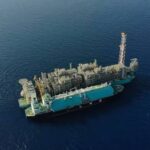
The group also expanded beyond the sale of raw agricultural commodities. Plantation operators can improve yields and control costs, but they have limited control over international prices for crude palm oil, rubber and palm kernel. KLK developed downstream manufacturing operations, including refining and oleochemicals, which convert palm oil and related feedstocks into ingredients used in personal care, food and industrial applications. The company also invested in other businesses, including cocoa processing, latex gloves, wood flooring and consumer products. These activities provided additional routes to market, although they introduced their own competitive pressures and operating risks.
Lee died on 22 November 1993, aged 72, after a short illness. His son, Lee Oi Hian, succeeded him and continued to develop the group’s plantation and manufacturing businesses. The succession tested whether the company could preserve the founder’s approach to long-term investment while managing an increasingly complex international organisation. Under the next generation, KLK continued to expand its oleochemical operations, explore overseas plantation opportunities and develop its property business. The group’s subsequent evolution became a family business story extending beyond the lifetime of its founder.
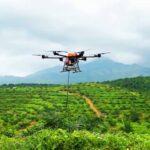
KLK’s current scale reflects the expansion undertaken over several decades. In its 2025 annual report, the group reported approximately 300,000 hectares of planted area, around 98% of which was planted with oil palm. Its plantations extend across Peninsular Malaysia, Sabah, Indonesia and Liberia. Manufacturing has also become a substantial part of the business. In FY2025, manufacturing generated RM20.87 billion of revenue, compared with RM3.68 billion from plantations and RM182.9 million from property development. The figures show that KLK is now an integrated plantation and manufacturing group, rather than a company whose revenue depends solely on agricultural production.
For the financial year ended 30 September 2025, KLK recorded revenue of RM25.02 billion, up from RM22.27 billion in FY2024. Profit before tax rose to RM1.51 billion from RM1.18 billion, while profit attributable to shareholders increased to RM817.3 million from RM591.0 million. Earnings per share reached 73.9 sen, compared with 54.3 sen a year earlier. The company maintained its full-year dividend at 60 sen per share. The results represented a recovery in shareholder earnings, although performance varied significantly across its business divisions.
The plantation division was the principal contributor to the improvement. Its profit before tax rose 41% to RM2.28 billion in FY2025 from RM1.62 billion in FY2024. Average realised crude palm oil prices increased to RM3,964 per metric tonne from RM3,653, while palm kernel prices rose to RM3,215 per metric tonne from RM2,115. Slightly improved fresh fruit bunch yields and continued cost optimisation also supported the result. The figures underline the importance of realised commodity prices and estate productivity in determining the profitability of a plantation business.
The group’s manufacturing operations, however, faced a more difficult year. The segment recorded a loss of RM173.6 million in FY2025, compared with a profit of RM95.3 million in FY2024. KLK also reported losses and impairment related to its associate Synthomer plc, as well as unrealised foreign-exchange losses arising mainly from the translation of intercompany loans. These items weighed on the group’s overall results and showed that diversification does not automatically reduce volatility. A plantation business can perform well while manufacturing operations face oversupply, pressure on margins and weaker returns from investments.
Comparisons with other Malaysian plantation companies help place KLK’s results in context. IOI Corporation Berhad reported revenue of RM11.33 billion and net profit of RM1.536 billion for the financial year ended 30 June 2025. Its plantation segment generated a profit of RM1.577 billion, supported by higher realised crude palm oil and palm kernel prices. IOI’s reported net profit exceeded KLK’s shareholder-attributable profit, despite its lower revenue. However, the companies have different financial year-ends and business mixes, so their results should not be treated as a direct ranking of operational performance.
Genting Plantations Berhad, another privately controlled Malaysian plantation group listed on Bursa Malaysia, recorded revenue of RM3.37 billion and net profit of RM368.5 million in 2025. Its adjusted EBITDA reached RM942.2 million, compared with RM870.3 million in 2024. KLK operates at a much larger revenue scale, reflecting its extensive plantation base and substantial manufacturing activities. Yet company size alone does not determine investment performance. Plantation acreage, yields, realised prices, processing margins, debt and the contribution of non-plantation businesses all affect earnings and returns on capital.
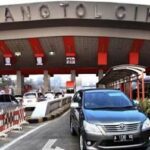
Property development has become another element of KLK’s strategy. Through KLK Land, the group has developed residential and commercial projects, including Desa Coalfields and Bandar Seri Coalfields in Selangor. In 2025, it launched the KLK TechPark series, beginning with a 1,500-acre freehold industrial park in Tanjong Malim, Perak. The location is close to the Automotive High-Tech Valley, the North-South Expressway and other infrastructure. The project gives KLK an opportunity to develop selected land for industrial use, adding a business that operates on a different timetable from plantation cultivation.
Lee’s entrepreneurial legacy lies in the combination of share accumulation, operational improvement, corporate restructuring and long-term reinvestment. He entered an established plantation company when its shares were under pressure, gained board representation, moved its corporate centre to Malaysia and expanded its oil palm operations. He also helped establish the foundation for a group that would later develop substantial manufacturing and property businesses.
INSIGHT :
- 01
- 02
- 03
- 04
- 05
- 06