




The airline business is an unusual place to begin an entrepreneurial success story. It requires substantial capital, highly trained employees, complex safety systems, aircraft financing, airport access, and the ability to operate within a tightly regulated industry. Yet Nguyen Thi Phuong Thao saw an opportunity in Vietnam’s developing air-travel market and helped build VietJet into one of the country’s most important private-sector airlines. Her journey began well before the company’s first commercial flight, with experience in international trade and a willingness to pursue opportunities across borders.
Thao studied economics and finance in the Soviet Union during the 1980s and began trading commodities while still young. Her early business activities connected suppliers and customers across Eastern Europe and Asia, exposing her to the practical mechanics of international commerce. Trading required an understanding of demand, price differences, logistics, and the risks involved in moving goods between markets. These experiences gave her a commercial foundation before she entered the much more capital-intensive aviation industry.
The trading business was important because it taught her to think beyond a single domestic market. An entrepreneur working across borders must understand that commercial opportunities often emerge from differences between countries: what is available in one place, what is scarce in another, and what customers are willing to pay to obtain it. The same broad instinct would later be relevant to aviation, where an airline connects people and businesses that might otherwise face considerable costs or inconvenience when travelling between cities and countries.
Building an airline, however, demanded a different set of capabilities. Trading businesses can often grow by increasing transaction volumes and managing working capital, while airlines must commit to aircraft, crews, maintenance, airport operations, and schedules before they know precisely how many seats will be sold. An empty seat on a departing aircraft cannot be stored and sold the following day. The economics depend on forecasting demand, managing capacity, controlling costs, and generating sufficient revenue from each flight to support the entire operation.
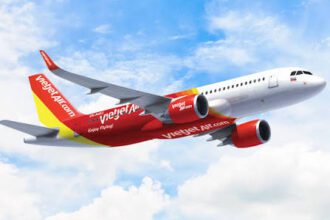
Thao became associated with the creation of VietJet, a privately owned commercial airline that began operations in 2011. The company entered a market in which air travel was increasingly relevant to Vietnam’s growing economy and expanding middle class. As incomes rose and businesses became more connected, demand for domestic and international travel created room for an airline with a different cost structure and a broader consumer proposition. VietJet’s ambition was to make flying accessible to more people rather than position itself exclusively as a premium service.
The low-cost model depends on a careful balance between affordability and operational reliability. Lower fares can attract customers who might otherwise travel by road or rail, but the airline must still pay for aircraft, fuel, maintenance, employees, airport services, and regulatory compliance. The business therefore depends on a disciplined operating structure, efficient aircraft utilisation, carefully planned routes, and additional revenue streams that complement ticket sales. The challenge is to reduce unnecessary costs without compromising safety or the reliability customers expect.
VietJet’s brand helped distinguish it in Vietnam’s aviation market. Its public image was more informal and commercially aggressive than that of a traditional full-service airline, attracting attention as the company sought to establish itself. Marketing helped the airline stand out, but its long-term success depended on the more difficult work of developing routes, securing aircraft, building operational capacity, and persuading passengers to use the service repeatedly. In aviation, publicity may sell the first ticket, but the quality and economics of the operation determine whether the business can endure.
The company’s expansion reflected the opportunities created by Vietnam’s growing travel market. Domestic routes connected major commercial centres and tourism destinations, while international services extended the airline’s reach to other Asian markets. Each new route required decisions about expected passenger demand, competition, airport capacity, and aircraft deployment. Expansion could strengthen the network by giving travellers more choices, but it could also create financial pressure if capacity grew faster than demand. Route planning was therefore central to the company’s commercial strategy.
Aircraft financing became another defining part of the enterprise. Airlines must decide whether to lease or purchase aircraft, how to structure their commitments, and how much capacity they can afford to operate. These decisions affect cash flow for years, especially when travel demand changes unexpectedly. A rapidly expanding airline can appear successful because its fleet and route network are growing, yet the real test is whether those investments produce sustainable returns. Managing growth in aviation requires the founder to think simultaneously about the next route and the balance sheet that supports it.
Thao’s business interests extended beyond VietJet. She became associated with Sovico Holdings, a broader investment group with interests that include finance, real estate, and other sectors. That diversification expanded the scope of her business activities, but it also meant that her overall commercial profile could not be understood through airline operations alone. For investors examining the group, it is important to distinguish VietJet’s reported results from the performance and assets of other businesses connected with the broader investment portfolio.
The scale of VietJet’s operations illustrates how far the business moved beyond its early ambitions. Fortune reported that the airline carried 25.3 million passengers in 2023, compared with 24.1 million for Vietnam Airlines, the state-owned carrier. The comparison was a notable indicator of VietJet’s place in the domestic aviation market, although passenger totals alone do not establish profitability or overall financial strength. Airlines differ in route mix, average fares, fleet commitments, and other factors that determine their financial performance.
The group’s financial performance must also be evaluated with care. VietJet’s operating revenue is not the same as the combined revenue of every business associated with Thao, and airline accounting can be affected by aircraft transactions, leasing arrangements, and other items. Nevertheless, the airline has grown into a business operating at a scale far beyond the US$100 million threshold specified for this profile. Its development shows that a private-sector company can become a major participant in an industry historically dominated by national carriers, provided it can assemble the capital, operating capabilities, and market presence required to compete.
Aviation also exposes the limits of entrepreneurial control. Fuel prices fluctuate, currencies move, airports impose operating constraints, and governments regulate routes and safety standards. A public-health crisis or a sudden deterioration in travel demand can weaken an airline’s finances with extraordinary speed. The founder can influence the company’s strategy, financing, and cost structure, but cannot control many of the forces that determine its operating environment. The quality of management is often revealed by how the company prepares for those risks before they materialise.
For VietJet, international expansion presents both an opportunity and a test. More overseas routes can diversify revenue and strengthen the airline’s network, but they also bring new regulatory requirements, competitive conditions, and operating costs. The airline must determine which routes can support sustainable demand rather than treating every new destination as a symbol of progress. A growing route map is commercially valuable only when the underlying economics make sense and the organisation can maintain reliable operations across the network.
Thao’s story also illustrates the distinction between self-made wealth and a business built without any resources. Her early trading activities provided experience and commercial foundations; building an airline subsequently required substantial financing, partnerships, and access to capital. It would be misleading to suggest that a carrier can be constructed through personal effort alone. The more useful lesson is that entrepreneurial ability can involve recognising an opportunity, building a credible business case, mobilising resources, and creating an organisation capable of operating in a complex industry.
For women entrepreneurs, her career offers a particularly visible example of leadership in a sector traditionally associated with large capital commitments and technically demanding operations. Thao became a prominent figure in Vietnamese business by pursuing an opportunity that required negotiations with financiers, aviation partners, regulators, and corporate stakeholders. Her position challenges conventional assumptions about who can lead a major industrial enterprise, while the performance of the businesses she oversees remains subject to the same commercial tests that apply to any entrepreneur.
INSIGHT :
- 01
- 02
- 03
- 04
- 05
- 06