





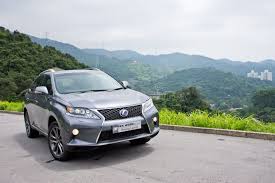
(Tokyo) — Toyota Motor Corp. is maintaining its position in the global automotive industry as competition intensifies, vehicle technologies evolve and economic uncertainty persists. The Japanese automaker reported consolidated revenue of ¥13.53 trillion, equivalent to approximately $84.5 billion, for the first quarter of fiscal 2027, which ended June 30, 2026. Revenue increased 10.4% from the same period a year earlier, demonstrating the scale and resilience of Toyota’s business despite cost pressures and changing market conditions.
Net income attributable to Toyota’s owners reached ¥1.48 trillion, or approximately $9.2 billion, rising sharply from ¥841 billion in the corresponding period a year earlier. Operating income, however, declined to ¥1.06 trillion from ¥1.17 trillion. The divergence indicates that stronger net income did not necessarily reflect an improvement in underlying operating profitability, as foreign exchange movements, taxes and non-operating items also influenced the results.
Toyota’s consolidated vehicle sales reached approximately 2.395 million units during the quarter, down about 16,000 units from the previous year. Despite the modest decline in volume, higher revenue suggests the company benefited from its product mix, pricing and contributions from regional markets. Toyota continues to rely on its global manufacturing and distribution network to serve customers across multiple segments, from family vehicles to premium Lexus models.
For the fiscal year ending March 2027, Toyota forecasts consolidated vehicle sales of 9.7 million units. The company also projects revenue of ¥54 trillion, equivalent to approximately $337.5 billion, operating income of ¥3.4 trillion, or $21.3 billion, and net income of ¥3.25 trillion, or about $20.3 billion. These projections underscore Toyota’s enormous operating scale, while also indicating that management anticipates continued pressure on operating profitability during the current fiscal year.
Toyota’s share price on the Tokyo Stock Exchange is another indicator investors monitor when assessing the company’s outlook. On Oct. 15, 2026, Toyota shares, trading under ticker 7203, were quoted at ¥3,029, up 0.6% from the previous close. However, the stock remained down approximately 9.7% year to date, suggesting that investors continued to weigh risks to future growth and profitability despite the company’s relatively solid revenue performance.
One of Toyota’s key strengths is its electrification strategy, which does not rely on a single vehicle technology. The company follows a multi-pathway approach that includes internal combustion engine vehicles, hybrid electric vehicles (HEVs), plug-in hybrid electric vehicles (PHEVs), battery electric vehicles (BEVs) and fuel cell electric vehicles (FCEVs). This strategy allows Toyota to tailor its products to consumer purchasing power, charging infrastructure, energy availability and emissions regulations in different markets.
Hybrid vehicles remain a central pillar of that strategy. By combining an internal combustion engine with an electric motor, hybrid technology can improve fuel efficiency without requiring drivers to depend entirely on external battery-charging infrastructure. In North America, Toyota and Lexus sold 117,215 electrified vehicles in September 2026, an increase of 37.8% from a year earlier. Electrified vehicles accounted for 58.2% of the two brands’ combined sales that month, highlighting strong demand for vehicles offering different levels of electrification.
While maintaining its hybrid advantage, Toyota is also accelerating the development of battery electric vehicles. The company is preparing its next generation of BEVs, with an emphasis on extending driving range, reducing battery costs, improving manufacturing efficiency and refining vehicle design. Toyota has previously outlined plans for advanced batteries capable of delivering driving ranges of up to approximately 1,000 kilometers under relevant testing conditions, alongside faster charging and lower costs. These remain development targets and do not guarantee that every production model will achieve the same specifications.
Battery development is becoming increasingly important in the global electric vehicle market. Toyota is pursuing several lithium-ion battery technologies, including designs intended to improve energy density and lower vehicle costs. The company is also continuing its development of solid-state batteries, which could offer performance improvements, although commercialization will depend on production costs, reliability and the ability to manufacture them at scale.
Toyota is also strengthening its battery development capabilities in North America. On Oct. 1, 2026, the company opened the Toyota Battery Center of North America in Saline, Michigan. The facility expands its battery testing and development capabilities, covering everything from raw material evaluation to vehicle applications and recycling. The investment demonstrates that Toyota’s electrification strategy extends beyond launching new models to include technological development and a stronger battery supply chain in a key market.
In Indonesia, Toyota is deepening its electrified vehicle supply chain through its partnership with Contemporary Amperex Technology Co. Ltd. (CATL), one of the world’s largest battery manufacturers. In April 2026, PT Toyota Motor Manufacturing Indonesia announced an investment of 1.3 trillion rupiah to support the development of electrified vehicle battery production. The collaboration is intended to expand local capabilities from battery assembly toward cell and module manufacturing, increase domestic content and create export opportunities.
Beyond batteries, Toyota is seeking to strengthen its competitiveness through vehicle software development. The Arene platform, developed within the Woven by Toyota ecosystem, is designed to support vehicle operating systems, software updates and digital feature development. Software capabilities are becoming increasingly important as automotive competition extends beyond engines, design and fuel efficiency to include safety features, connectivity and user experiences that can be updated after vehicles reach the market.
Toyota is also working to transform its manufacturing processes to reduce costs and accelerate product development. The company is developing modular vehicle architectures, large-scale casting technologies known as gigacasting, and more automated production systems. These initiatives aim to reduce component counts, simplify assembly and lower factory investment requirements. If implemented effectively, manufacturing efficiencies could help Toyota maintain competitive pricing while freeing up resources for investment in batteries, software and next-generation vehicles.
Nevertheless, Toyota faces increasingly complex challenges. Chinese electric vehicle manufacturers are intensifying competition through pricing, rapid model development and integrated battery technologies. Meanwhile, trade tariffs, foreign exchange volatility, raw material costs and differing electrification policies across countries can affect profit margins. Toyota must balance long-term investment in emerging technologies with the need to generate returns from established vehicle models that already have strong market positions.
INSIGHT :
- 01
- 02
- 03
- 04
- 05
- 06